
Versa-F Premium Vision System: How Multi-Sensor Fusion Redefines Precision Measurement Limits
Posted2026-9-10
Precision manufacturing is driving a structural shift in measurement equipment requirements. The Versa-F flagship vision measuring system redefines the capabilities of vision systems at their core through multi-sensor fusion, AI-powered auto-shooting, seamless large-field stitching, and adaptive travel configuration. It delivers a comprehensive measurement strategy solution for manufacturers facing rising complexity in measurement demands.
Precision manufacturing is driving a structural shift in metrology requirements. Traditional single-sensor, single-dimension inspection can no longer meet the demand for parallel multi-feature measurement of complex components. From 3C electronics miniaturization and semiconductor packaging sub-micron precision to spatial surface evaluation of medical implants—all these scenarios point to one critical question: Can a single machine integrate multiple sensors and dimensions for unified data acquisition and fusion analysis?
The design logic of the Versa-F flagship vision measuring system (Matrix composite measurement vision system flagship) is centered on addressing this challenge.
Multi-Sensor Fusion: From "Capable" to "Comprehensive"
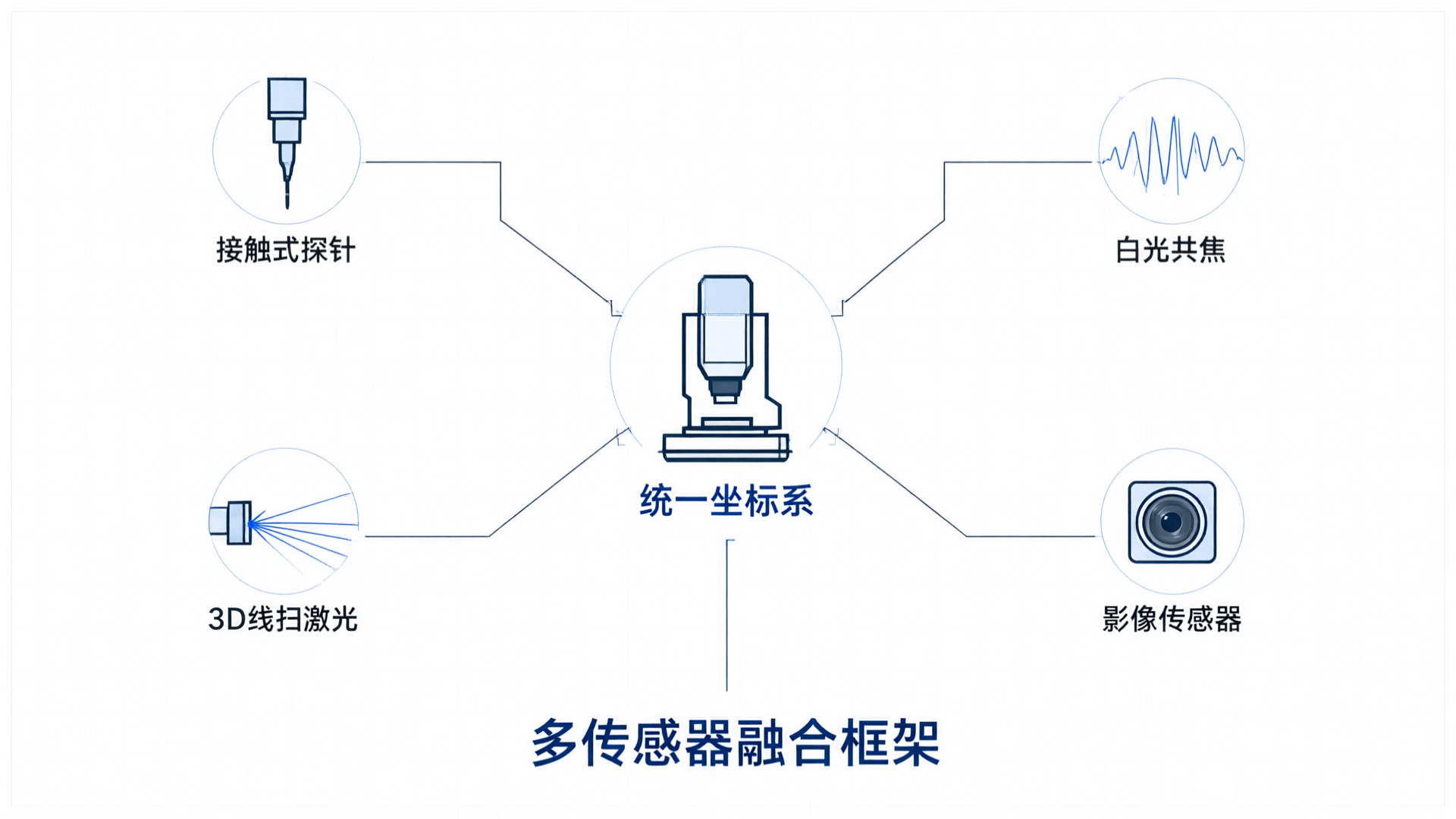
The limits of traditional imaging systems are defined by their optical capabilities. Contact probes fail on soft materials, white-light confocal sensors cannot penetrate highly reflective surfaces, and line-scan lasers lose data in narrow grooves—each sensor has its own physical constraints. Versa-F's solution isn't about stacking more sensors; it's about establishing a unified coordinate system and a robust data fusion framework.
The device supports plug-and-play configuration for multiple sensors, including contact probes, white light confocal, and 3D line-scan laser. This allows a single unit to quickly scan planar dimensions via imaging, measure surface roughness with the confocal sensor, and verify critical hole depths using the probe. All data aligns within a single coordinate system, eliminating cumulative errors from multiple setups.
For quality engineers, this configuration delivers value by enabling one device to handle tasks that previously required three. This boosts equipment utilization while ensuring measurement consistency.
AI Fly-Shot: The Algorithm Behind 2-Second Focus
"Fly capture" is not a new concept, but most implementations remain limited to "capturing while moving." Versa-F's AI-powered Fly Capture breaks through this limitation by optimizing the synergy between speed and path planning.
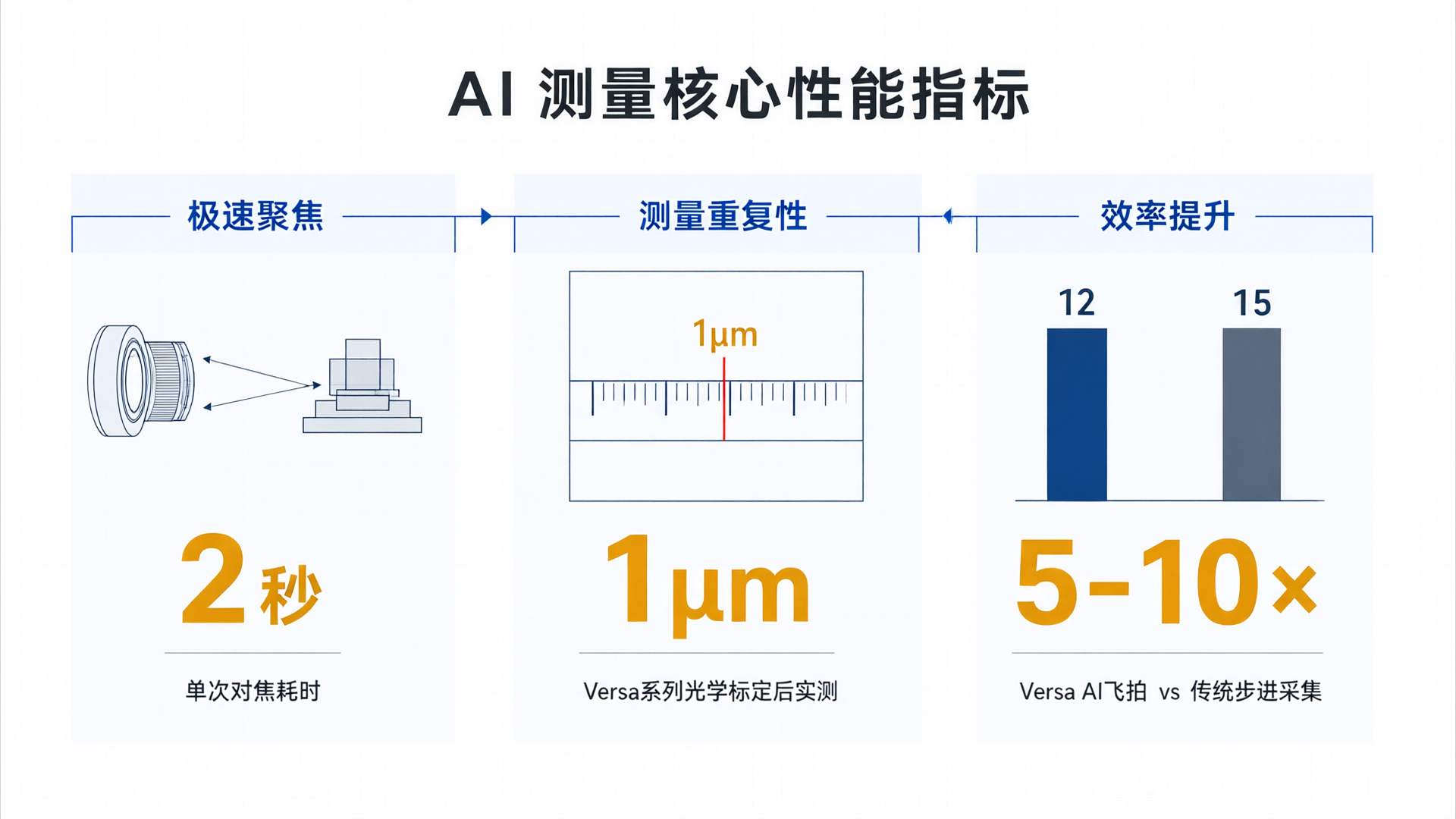
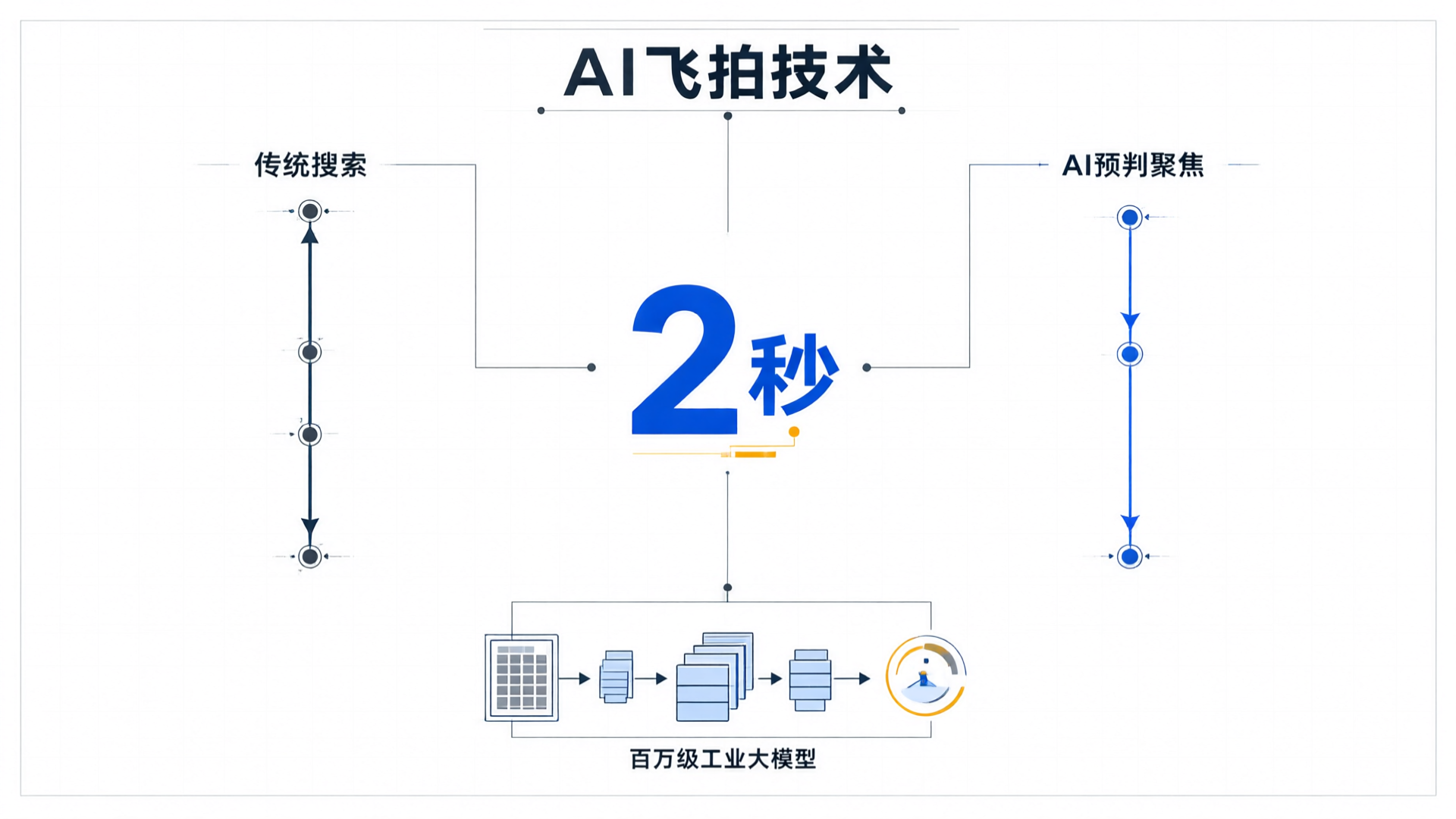
Powered by an industrial-grade large model trained on millions of images, the system achieves intelligent peak focus in 2 seconds. This isn't simple contrast-based searching; it's predictive focusing that anticipates surface topography. By leveraging historical data to predict the optimal focal plane, the algorithm significantly reduces Z-axis travel distance. For high-volume inspection workflows, this reduction in per-part measurement time directly translates to increased throughput.
More critically, AI-powered snapshot capture excels at edge extraction. Traditional imaging measurement relies on manually set thresholds to identify edges, requiring operators to repeatedly adjust parameters when dealing with burrs, reflections, or translucent materials. In contrast, the AI model can be deployed with minimal or no image training, automatically identifying complex boundaries and reducing dependence on operator expertise.
Seamless large-field stitching: Resolving the conflict between visibility and clarity.
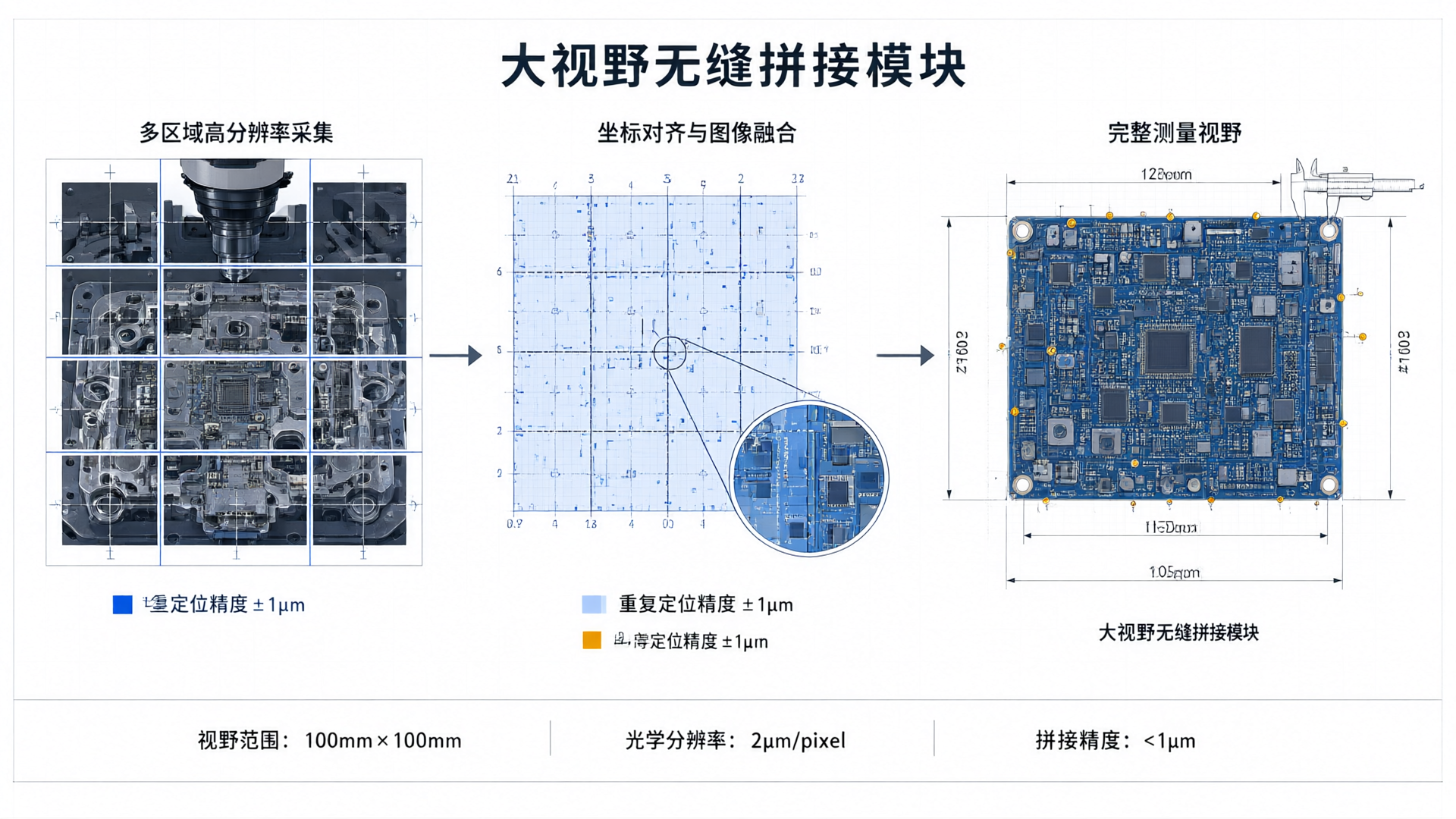
Measuring large components has long faced a trade-off between field of view and resolution. High magnification offers clarity but limits the viewing area, while low magnification provides a wider view at the cost of precision. Versa-F includes a standard wide-field seamless stitching module that expands the effective measurement range through multi-region high-resolution acquisition and algorithmic stitching, maintaining optical resolution throughout.
The stitching algorithm must address two key challenges: coordinate alignment accuracy between regions and natural image transitions at the seams. The former relies on the mechanical system's repeatability, while the latter depends on optimization of the image fusion algorithm. Versa-F's stitching module is specifically designed for both dimensions, ensuring that stitched images function as a single unified field of view for measurement in software, rather than a simple arrangement of independent images.
For users inspecting large PCBs, automotive interior components, or aerospace structures, this module expands the system's applicability without requiring equipment switching.
Adaptive Itineraries and Dynamic Authorization: On-Demand Engineering Implementation
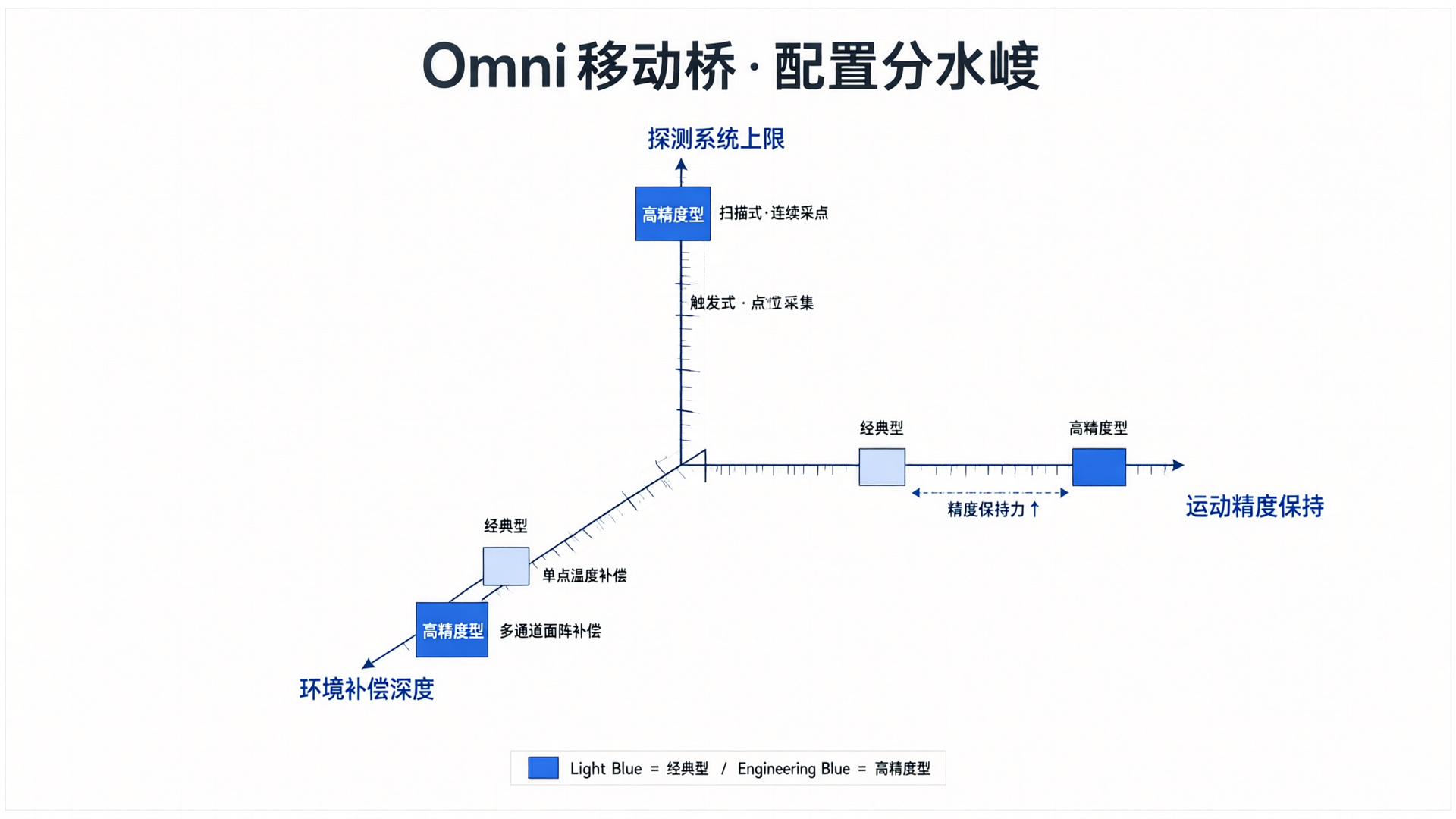
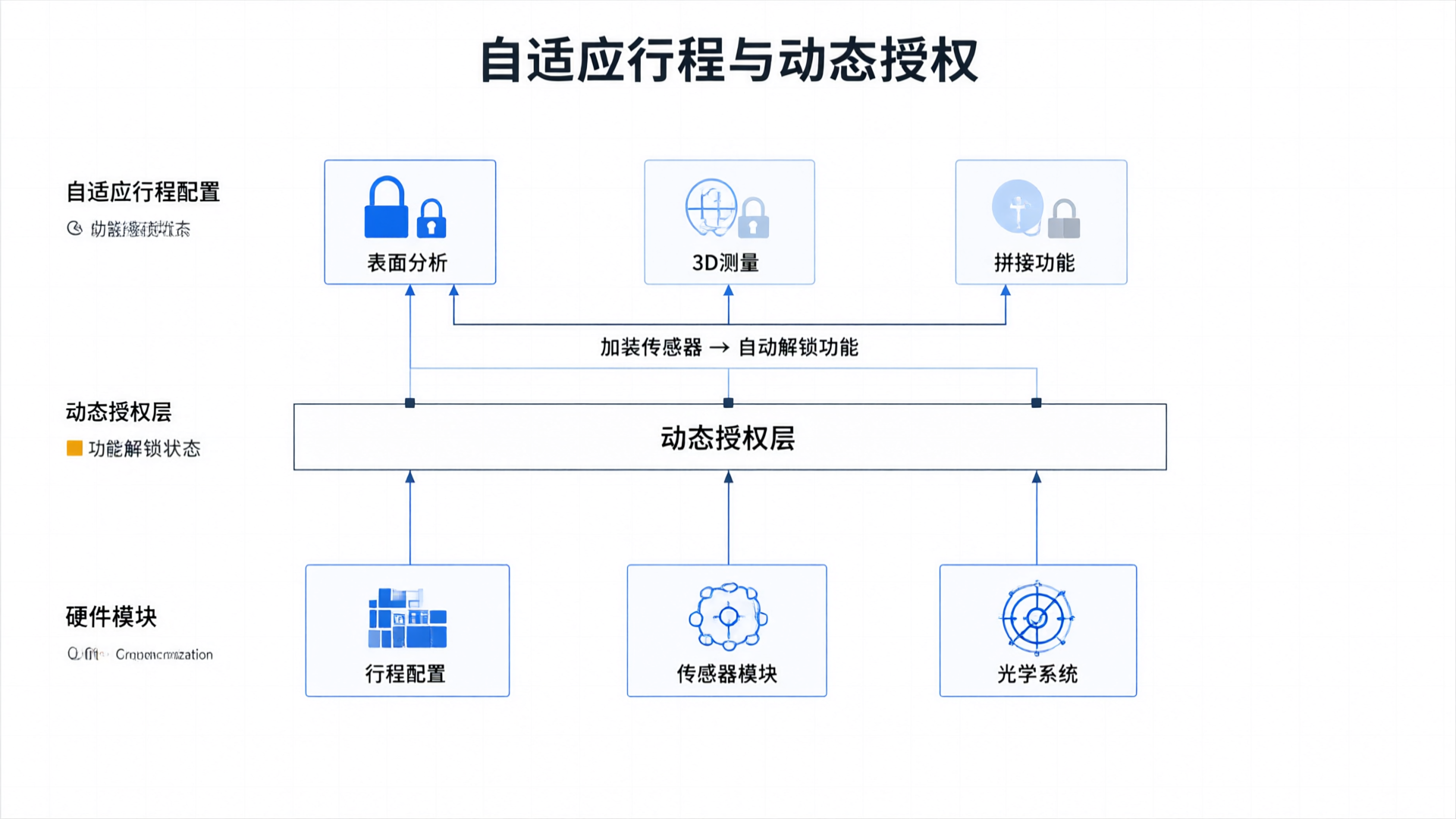
Different industries and workpieces have significantly varying measurement travel requirements. The Versa-F supports adaptive travel configuration tailored to your needs, allowing users to select X/Y/Z axis motion ranges based on actual part dimensions—so you only pay for the travel you use.
This modular approach extends to the software layer: a dynamic licensing system enables users to activate specific features on demand based on their installed sensors and modules. All functions are pre-installed at shipment, but licenses are tied to the actual hardware configuration. Adding a confocal sensor automatically unlocks surface analysis; if a sensor is not installed, its associated features remain locked.
This design lowers the initial procurement threshold while leaving room for future upgrades. Enterprises can scale device capabilities gradually as their business grows, rather than investing in all features upfront.
Conclusion
The design philosophy of the MAIKO ZhiCe Versa-F flagship vision system integrates multi-sensor fusion, AI-driven autofocus, wide-field stitching, and on-demand configuration into a unified platform. Rather than layering features onto existing products, it redefines the capabilities of vision systems from the ground up. For manufacturers facing rising measurement complexity, this equipment delivers not just incremental parameter improvements, but a complete reconstruction of measurement strategy.