
AI Snap + 2s Ultra-Fast Focus: How Versa Reduces Inspection Time to 1/5
Posted2026-9-3
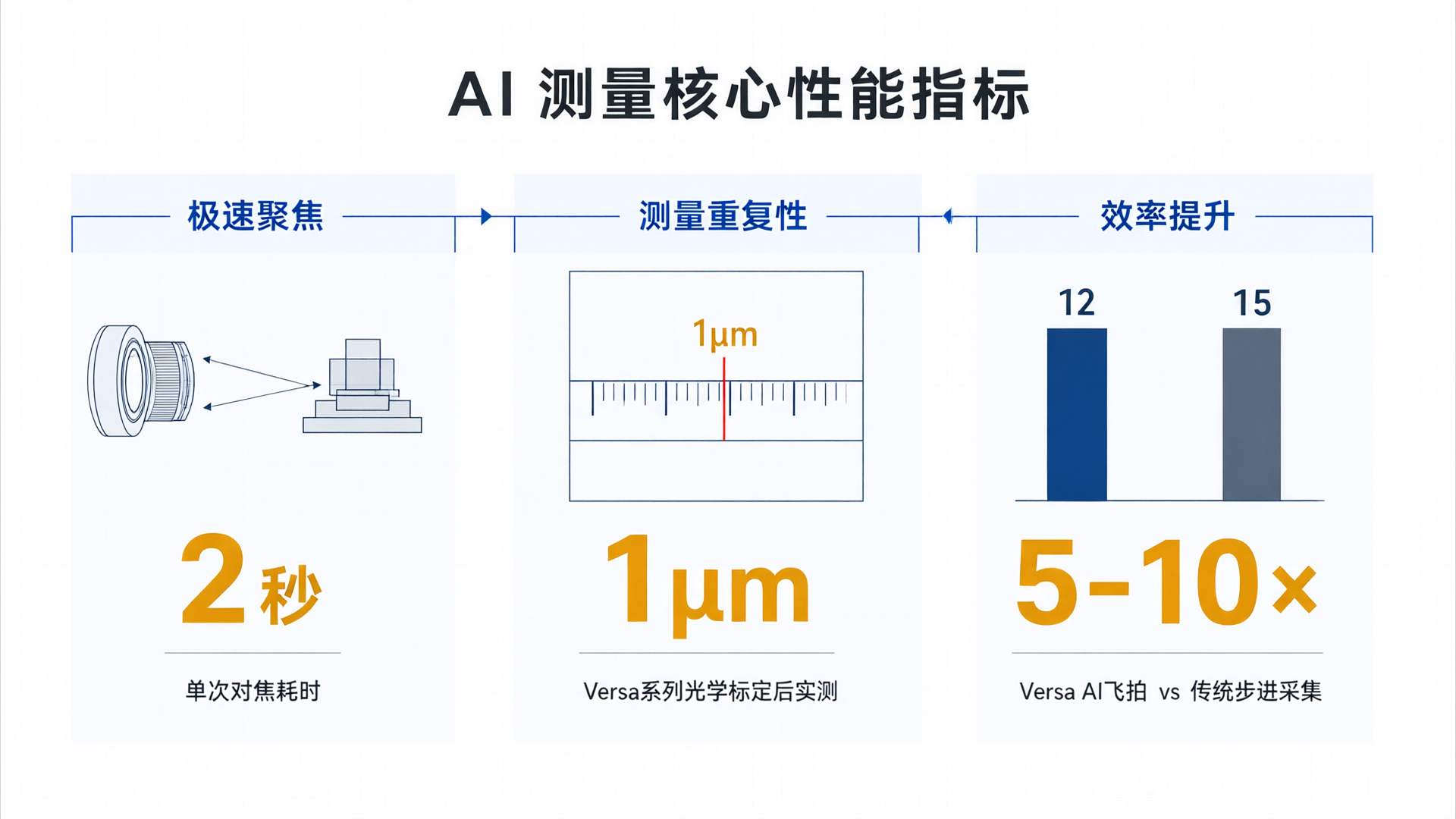
Traditional vision systems waste hours with the "stop–capture–stop–capture" cycle. The Versa Vision System cuts batch inspection time to one-fifth using AI-driven rapid capture and 2-second ultrafast focusing, overcoming measurement bottlenecks in both movement efficiency and Z-axis switching speed.
Quality control professionals often gather to discuss one common issue: measurement is too slow.
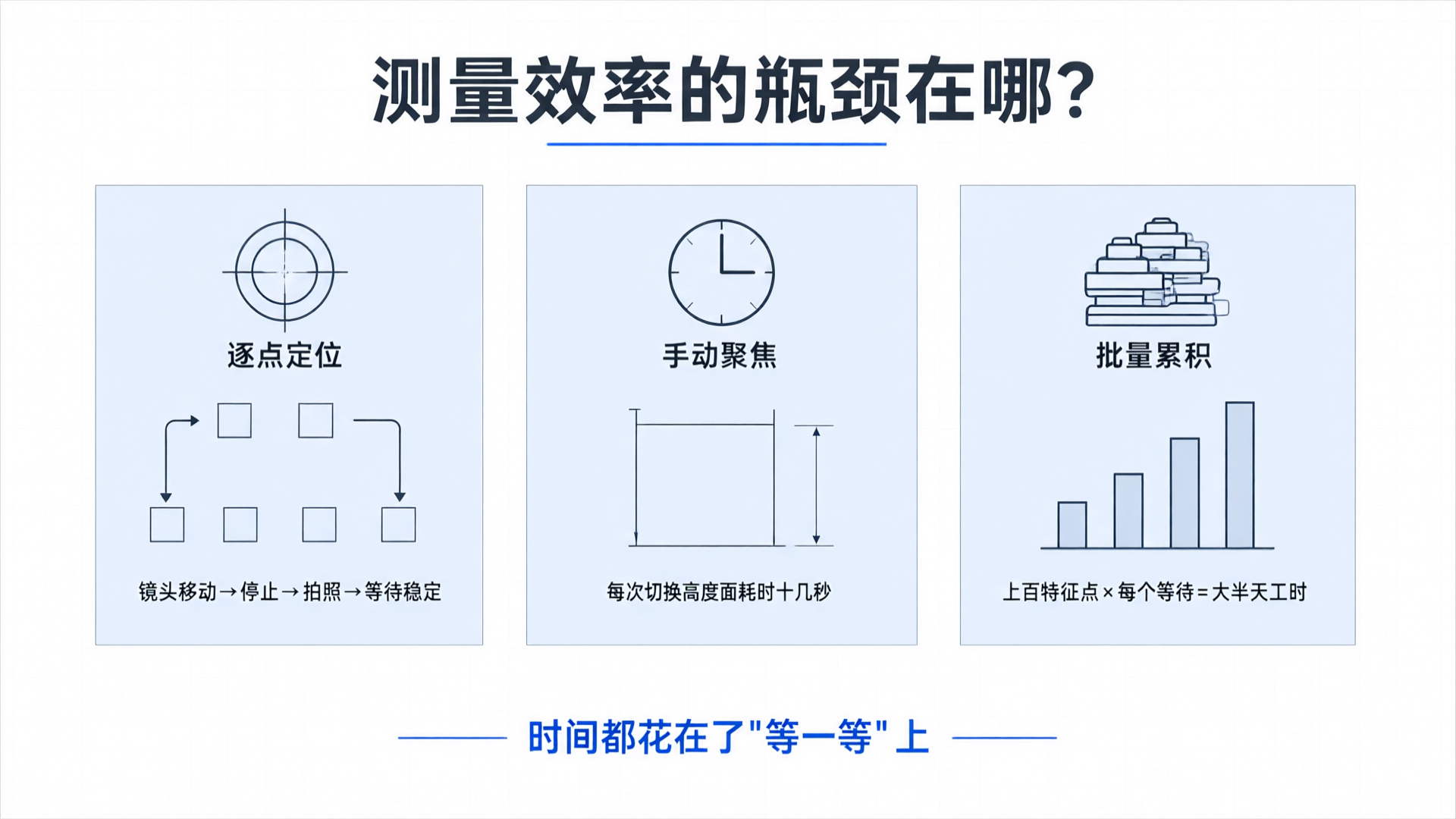
It's not that people are slow; the equipment can't keep up. A single part has dozens or even hundreds of feature points. The camera must align, focus, capture, and stabilize for each one. After processing a batch, half the day is gone. We've heard this complaint more than once.
Today, let's discuss two key features we've implemented on the Versa imager: AI-powered auto-scan and 2-second rapid focus—what problems they actually solve.
Stop to shoot, or shoot while running.
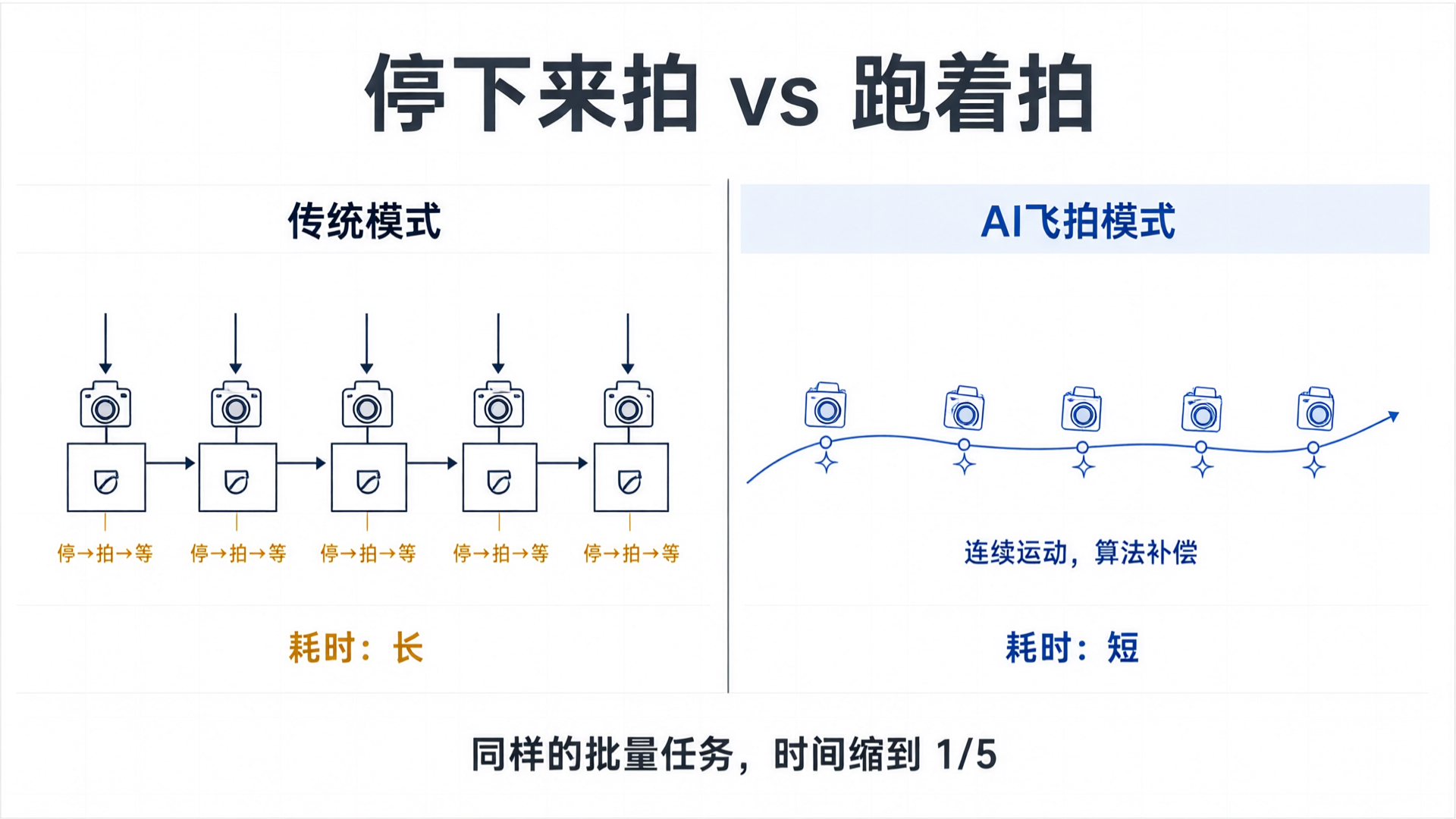
During traditional image measurement, the lens moves to a position, stops, captures an image, waits for stability, then moves to the next position, stops again, and captures another. This "stop–capture, stop–capture" cycle consumes time at every step. For parts with many feature points, this loop alone can account for over half of the total work hours.
AI Fly Shot has updated this logic.
The camera never stops. It captures images while moving continuously, with algorithms automatically compensating for motion-induced deviations. Every critical feature point is detected—none missed. The result? For the same batch inspection tasks, customers report processing time reduced to one-fifth of the original.
Not polished numbers from a lab. These are results verified on the production line, shift after shift.
Focus on this—no need to wait.
Another time-consuming step is focusing.
Focusing on a single planar feature is relatively straightforward. However, many parts have features at multiple heights—one hole at the bottom, another step at the top. Each time you switch features, you must refocus. During manual focusing, you watch the screen and adjust slowly until the image is sharpest, then capture the photo. This process takes 10 to 30 seconds per feature point. For a part with dozens of features, the total time spent just on focusing can be significant.
2 seconds to instant focus is designed for this scenario.
The system automatically identifies the optimal focal plane and completes focusing within 2 seconds. Before you can react, the shot is already taken. For parts that frequently change height, this speed advantage multiplies—what you save isn't just a second or two, but dozens of "waiting for focus" cycles added together.
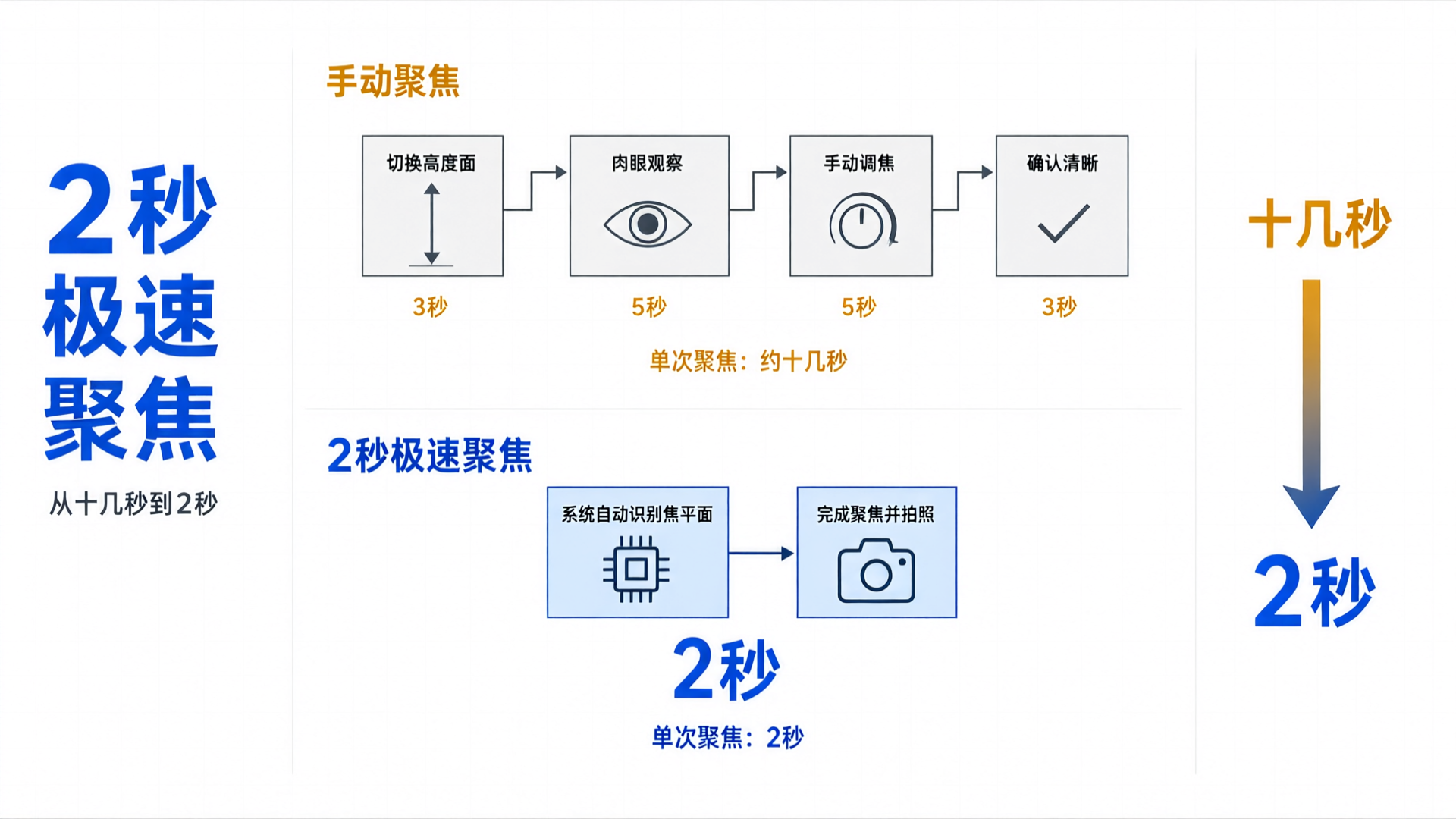
When combining two features
Individually, AI Flyshot addresses "efficiency while moving," while 2-second Focus tackles "efficiency during height changes." In real-world workshops, however, these two features are often used together.
Test a batch of precision stampings: plane features are scanned via fly-shot, while 3D features switch to 2-second focus for automatic focusing. The entire process that used to take minutes can now be completed in just seconds.
A 3C electronics client told us that batches which previously couldn't be completed in one shift now finish two to three hours early. No overtime was added; the equipment simply eliminated wait time.
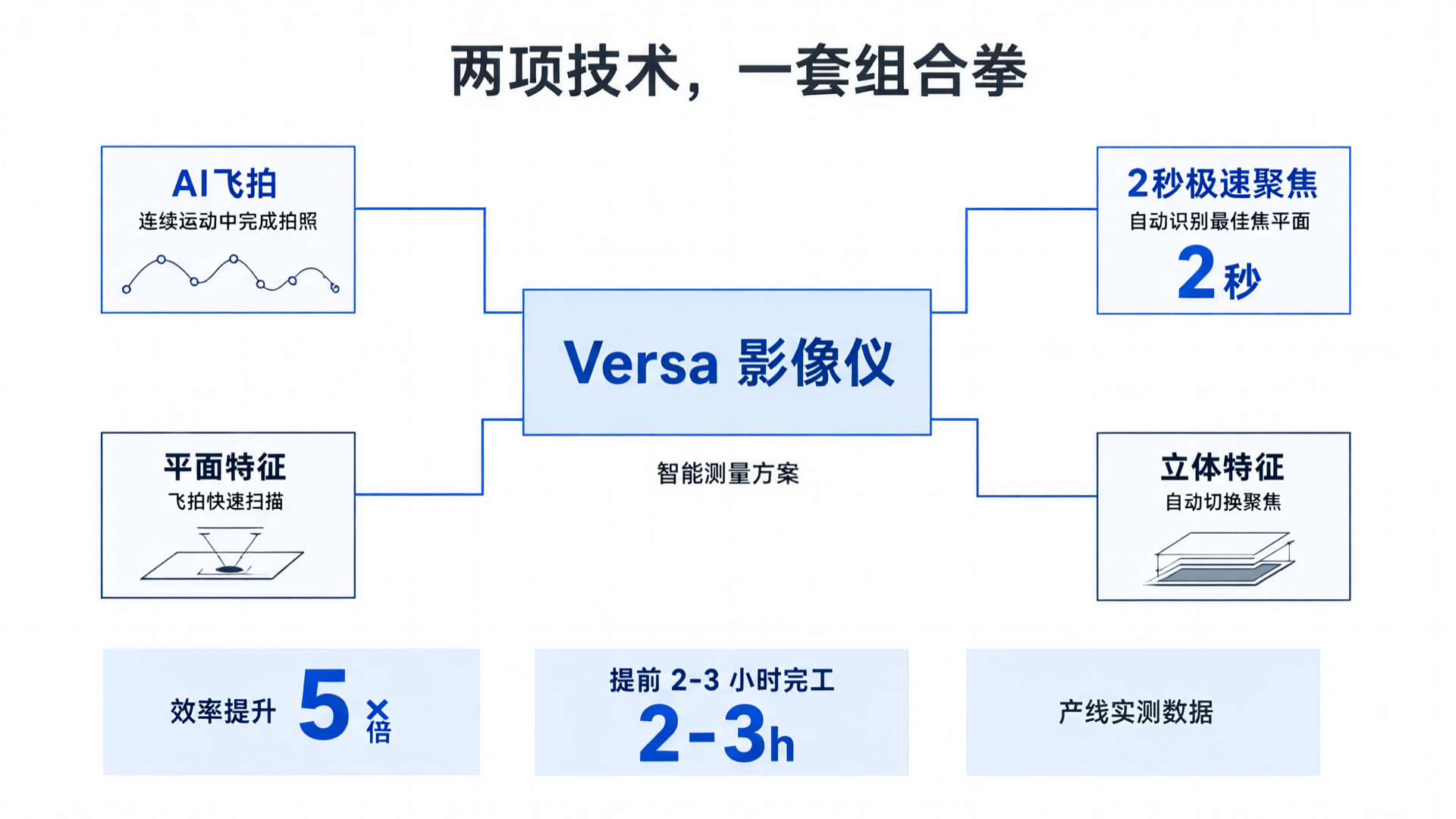
Go back to that question
The question customers ask most isn't "What technology do you use?" but rather, "Can we improve our detection efficiency?"
AI Flyshot and 2-second focus: the solution to that problem. The tech jargon sounds complex, but on the shop floor it means one thing: saving you those "wait" moments.
If your product is also struggling with efficiency measurement, reach out to us. We'll show you exactly how much faster these two features can be on your specific workpieces and provide a tailored assessment based on your actual needs.