
Avoid Pitfalls in Selecting Automotive Mold Equipment: The Logic Behind Using an Intelligent Configurator to Pre-select Omni Large-Stroke Models
Posted2026-9-14
Selecting a large-travel CMM involves far more complexity than standard models due to the interplay among travel range, accuracy specifications, probe types, control systems, and software modules. Mikeso's Intelligent Configuration Tool transforms this process from manual spec-sheet comparison into a digital twin-driven engineering workflow. It validates compatibility constraints in real time, condensing multiple rounds of discussion into a single online configuration session.
9 is the prime window for manufacturing enterprises to upgrade their inspection equipment. For automotive mold manufacturers, the dimensional measurement requirements of large body-in-white molds and chassis structural components dictate the travel specifications of coordinate measuring machines (CMMs). Selecting a high-travel CMM involves far more complexity than standard models: travel range, accuracy metrics, probe types, control systems, and software modules are tightly interdependent. A single misstep can trigger cascading conflicts.
Hidden costs of oversized travel selection: parameter conflict
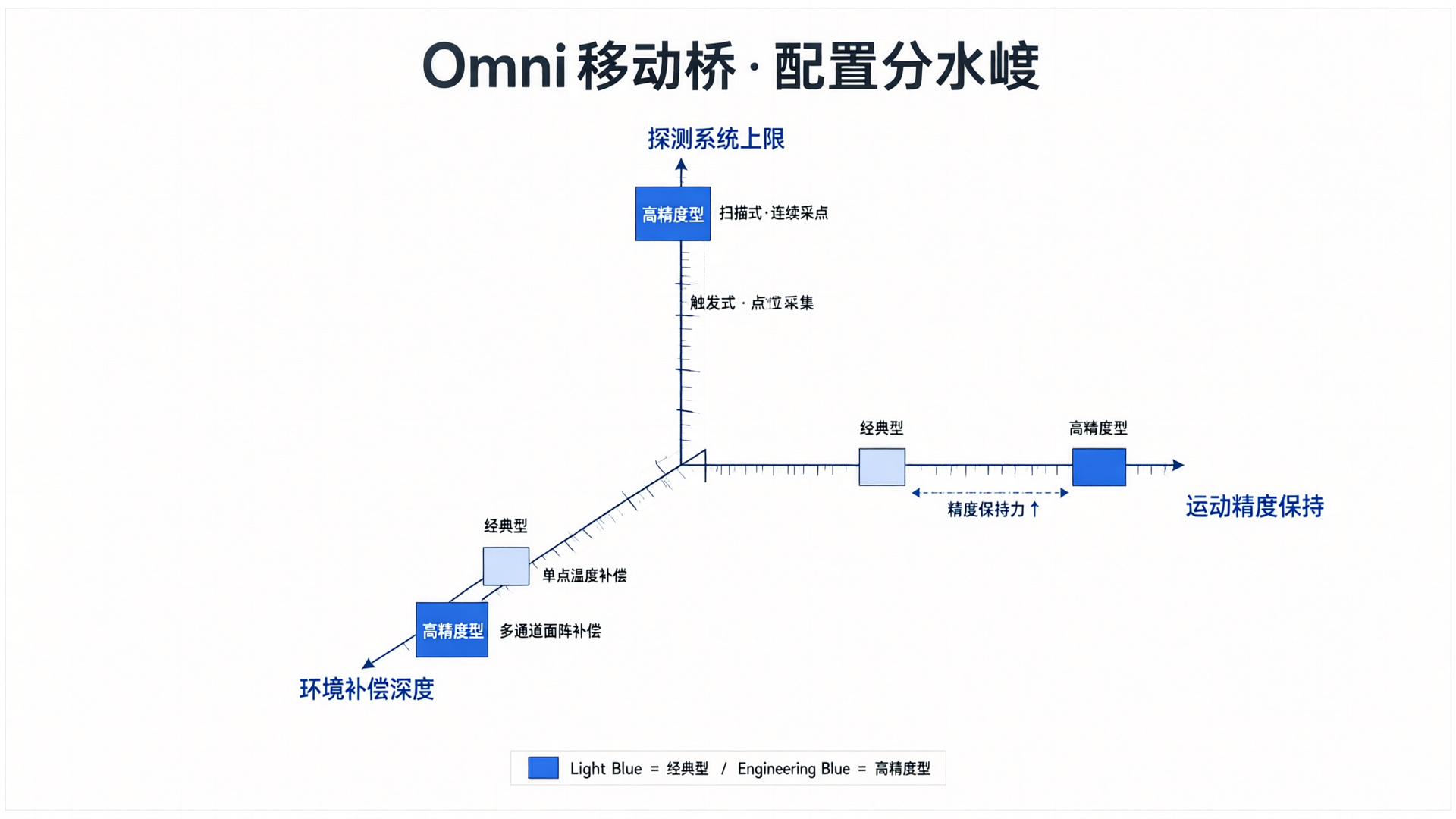
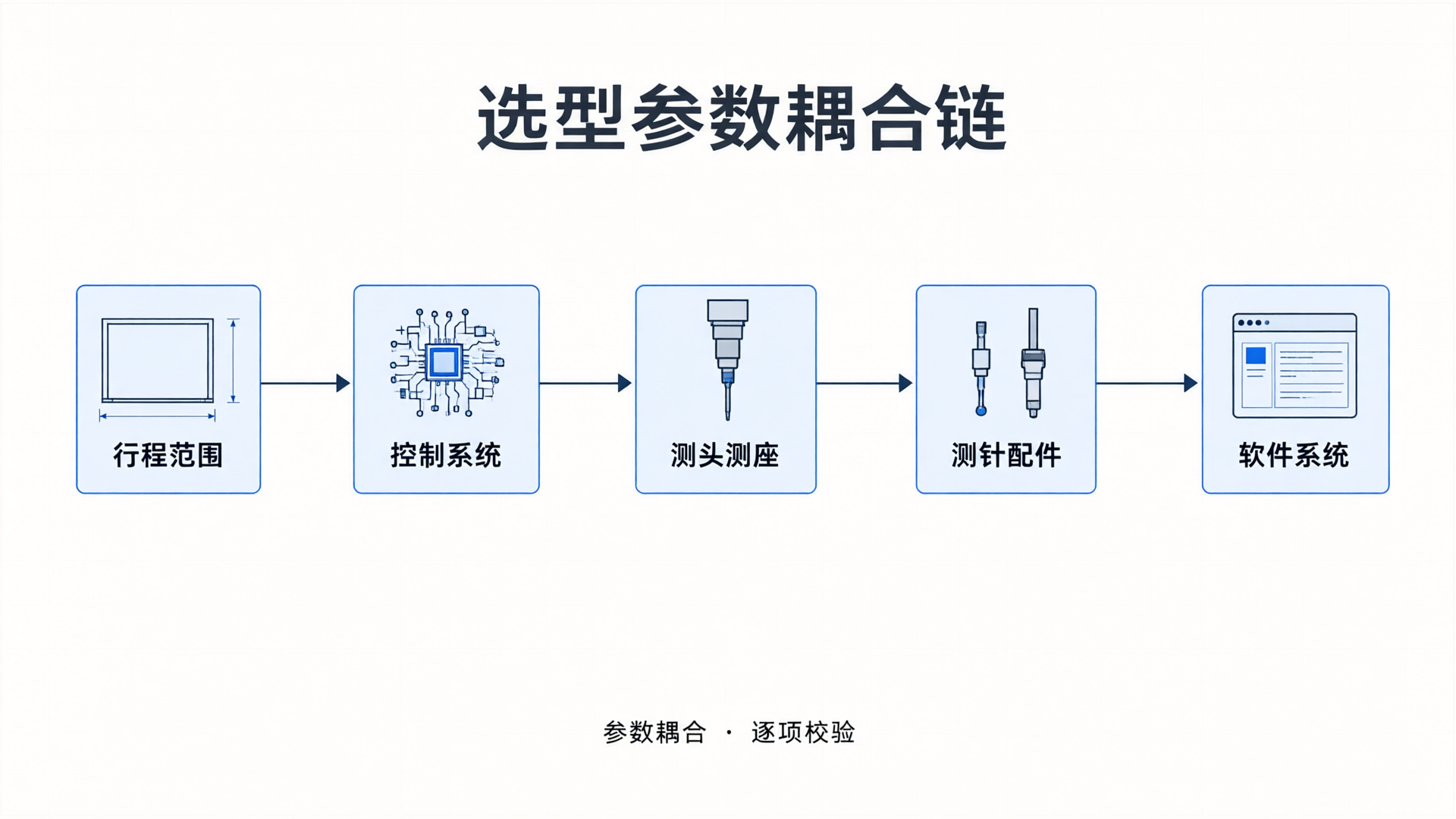
Automotive mold dimensions typically exceed 800mm × 1500mm, with some large body panel molds surpassing 2000mm. This requires equipment stroke to include a safety margin, making the Omni series high-precision moving bridge models with extended stroke the standard choice. However, stroke is just the starting point; the subsequent configuration chain is longer: the control system determines supported probe ranges, the probe type dictates stylus kit specifications, and software modules define data processing capabilities and AI feature availability.
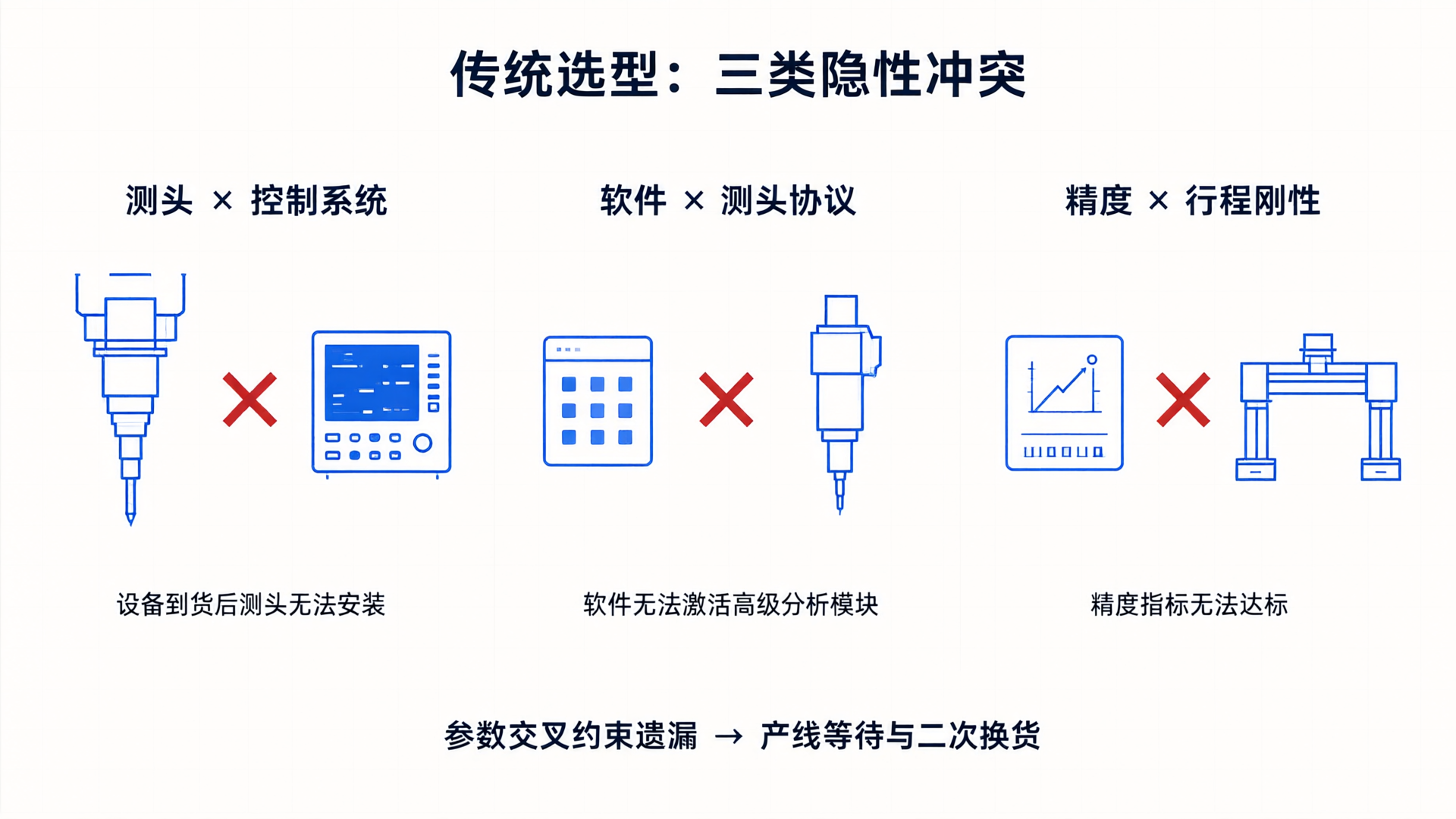
These parameters are subject to strict compatibility constraints. For instance, a specific scanning probe may only work with certain controller models, while the software's advanced analysis module requires the probe to support a particular sampling frequency. Traditionally, selection relies on manual cross-referencing of parameter tables; overlooking such interdependencies can lead to issues upon equipment arrival, such as probes that cannot be installed, software that fails to activate, or performance metrics that fall short. For 9-month orders with tight procurement timelines, these conflicts result in production line downtime and costly re-shipping.
From manual verification to system interception
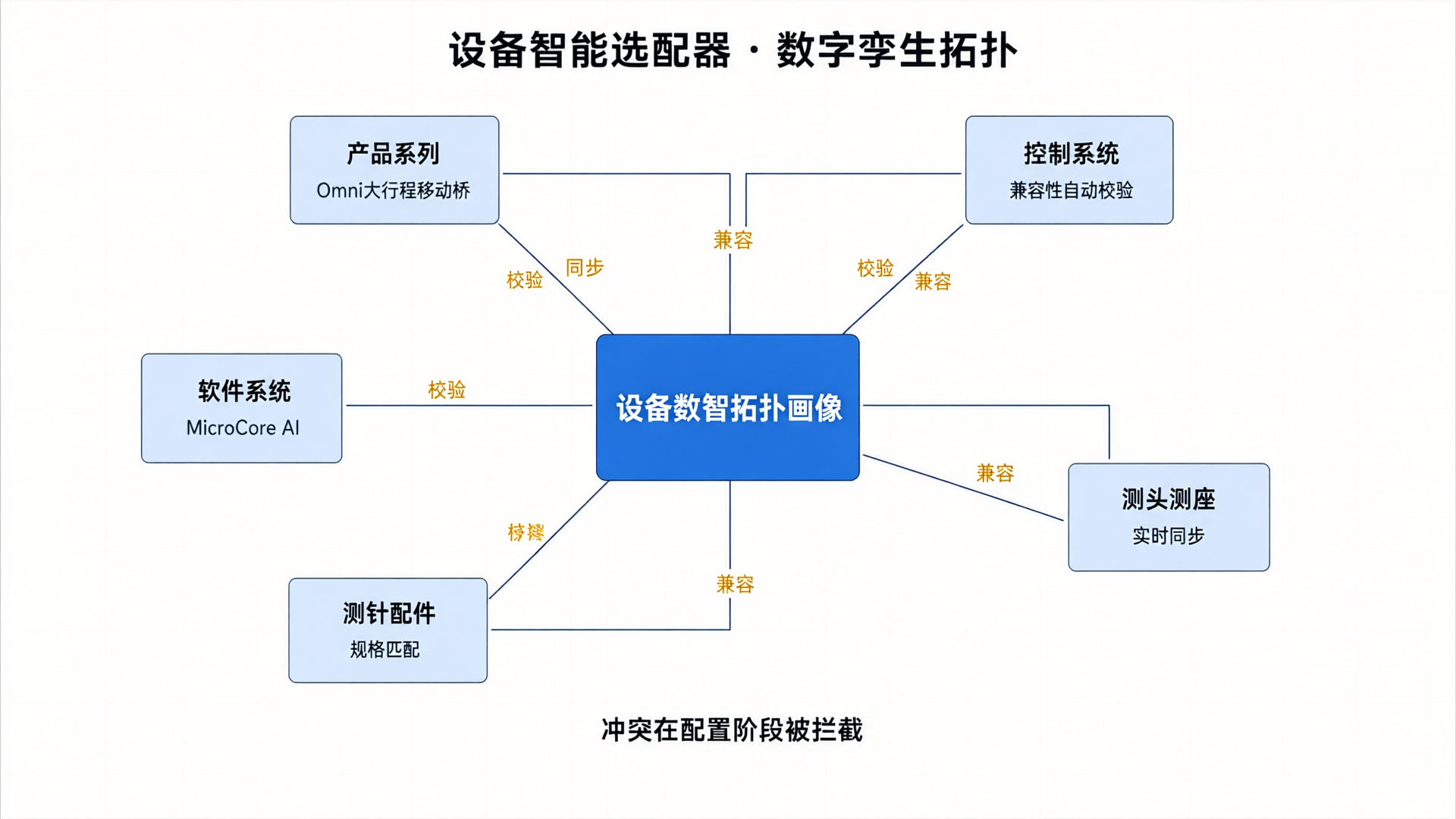
The Microcore OS Configurator,迈科智测's intelligent equipment selector, transforms the configuration process from parameter table comparison to a digital twin-driven systems engineering approach. After users select a product series on the visual interface, the system generates a complete digital intelligence topology of the equipment, covering five key configuration nodes: product series, control system, probe and mounting assembly, probe accessories, and software system.
Node selection results sync in real time to the topology map. System automatically validates compatibility constraints between nodes. When a user selects a probe on an Omni long-stroke machine, the system checks: whether the probe is compatible with the selected controller, if the matching probe kit is within available inventory specs, and whether MicroCore software supports the probe's data protocol. Any incompatible combinations are immediately flagged with adjustment guidance. Conflicts are resolved during configuration and never proceed to order processing.
Visual Solution for Parameter Coupling
Configuring large-travel models is challenging due to the high number of parameters and deep interdependencies. Once the travel distance is set, the bridge structure type is determined, which in turn affects the allowable probe weight range and precision compensation models. Different control systems offer varying levels of probe support, and software versions impose minimum requirements on those control systems. This multi-layered dependency is difficult to represent intuitively in a paper-based parameter sheet.
The Intelligent Device Selector visualizes the hardware architecture topology as a node diagram, where changes to any configuration node propagate downstream. When users adjust a parameter, they immediately see which downstream options are affected—avoiding conflicts discovered only during final review. Upon completion, the system generates a comprehensive digital blueprint with all parameter nodes clearly visible. Procurement and engineering teams can collaborate directly using this single source of truth, minimizing communication gaps.
Efficiency ROI: From multi-round discussions to one-time configuration
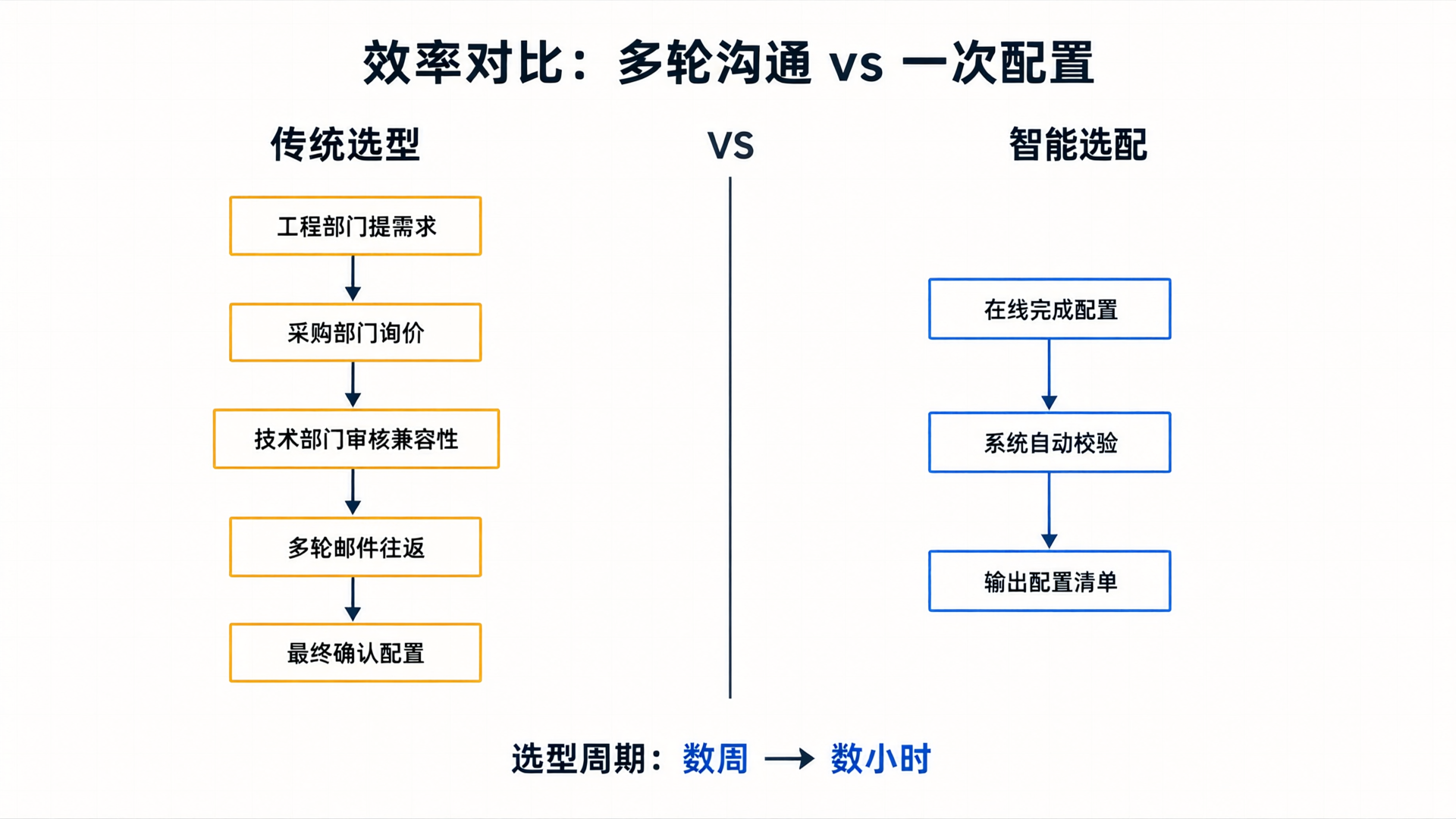
In traditional selection workflows, engineering submits requirements, procurement requests quotes, and technical teams verify compatibility—often requiring multiple email exchanges to finalize the configuration. The Intelligent Equipment Selector compresses this entire process into a single online operation: users complete all configurations in the interface, the system automatically validates compatibility, and generates a complete configuration list.
For automotive mold manufacturers, coordinate measuring machines (CMMs) are the core equipment in quality inspection. A poor selection decision carries significant risks: insufficient travel prevents large molds from being measured; inadequate accuracy causes PPAP audits to fail; incompatible probe heads delay mass production testing. Our Intelligent Configuration Tool transforms expert knowledge into reusable rules, enabling first-time buyers to achieve professional-grade selections. The Omni series of high-precision, long-travel bridge-type CMMs now supports complete online configuration—from product series to software systems—all within a single interface.
New Device Configuration Logic for Procurement Season
The 9 procurement season window is limited; selection efficiency directly impacts equipment delivery timelines. Maike Zhice's Intelligent Equipment Selector for the Omni series enables end-to-end online configuration from product selection to software systems. With real-time visual previews and intelligent conflict detection, it ensures every parameter combination is system-validated. For automotive mold manufacturers, selection is fundamentally a technical decision. Replacing experience-based judgment with digital tools is an effective path to reduce decision risk.