
Small-batch, high-mix medical parts: How to choose an Omni CMM
Posted2026-9-14
Medical device and implant testing differs from automotive mass production—bottlenecks stem from changeovers rather than measurement. This article explains how the Omni series mobile bridge CMM addresses three key pain points for medical clients across its Classic, High-Precision, and Large-Travel High-Precision models. It also outlines three selection criteria: part size and quantity, daily changeover frequency, and cycle time requirements.
Medical device and implant inspection follows a different logic than automotive mass production. The former involves small batches of dozens to hundreds of parts with constantly evolving varieties and numerous tiny features per component; the latter focuses on measuring the same part thousands of times against a single drawing. "Small batch, high variety" shifts the challenge for CMMs from "accuracy" to "changeover speed" and "fixture correctness." When developing our Omni series bridge-type CMMs, we structured our recommendations for medical clients around these two priorities.
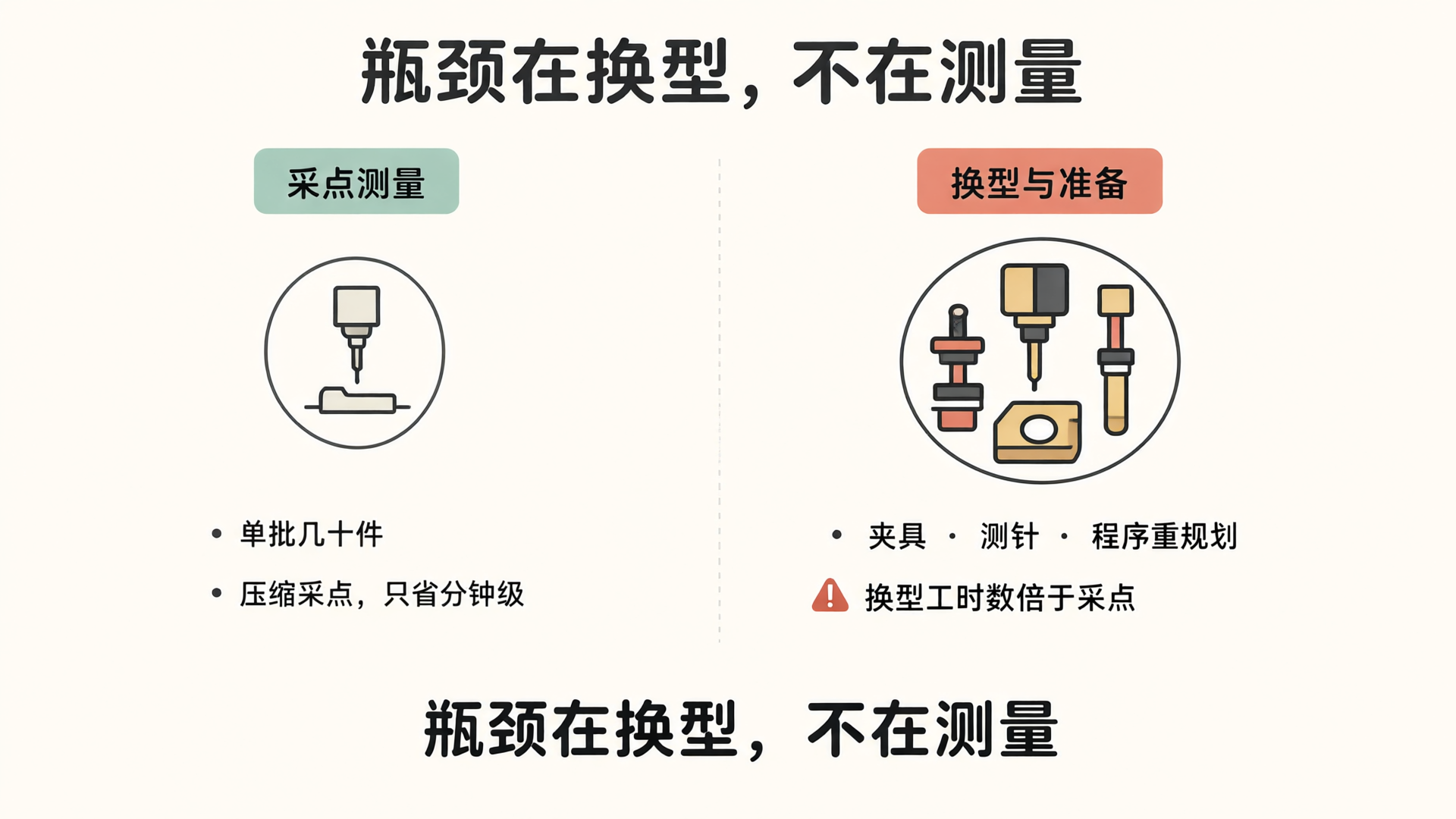
The bottleneck is changeover, not measurement.
Conclusion: Efficiency losses in medical inspection lines primarily occur during fixturing and programming, not during point acquisition.
The reason lies in its batch structure. With only dozens of parts per batch, even compressing the measurement time per part yields savings measured in minutes for the entire lot. Moreover, every new product launch requires retooling fixtures, swapping probe tips, and replanning programs—changeover time often exceeds actual data collection time by several times. Additionally, medical components are subject to traceability requirements; repeated measurements under identical fixture and probe configurations must yield consistent results. Without such consistency, compliance audits cannot be passed. Consequently, selection becomes a trade-off: prioritize flexibility over pushing for unnecessary high-precision ceilings, as long as feature measurement accuracy and traceable repeatability are met. This is precisely why Omni is offered in multiple model tiers.
Omni Mobile Bridge: Three Models, Three Core Challenges
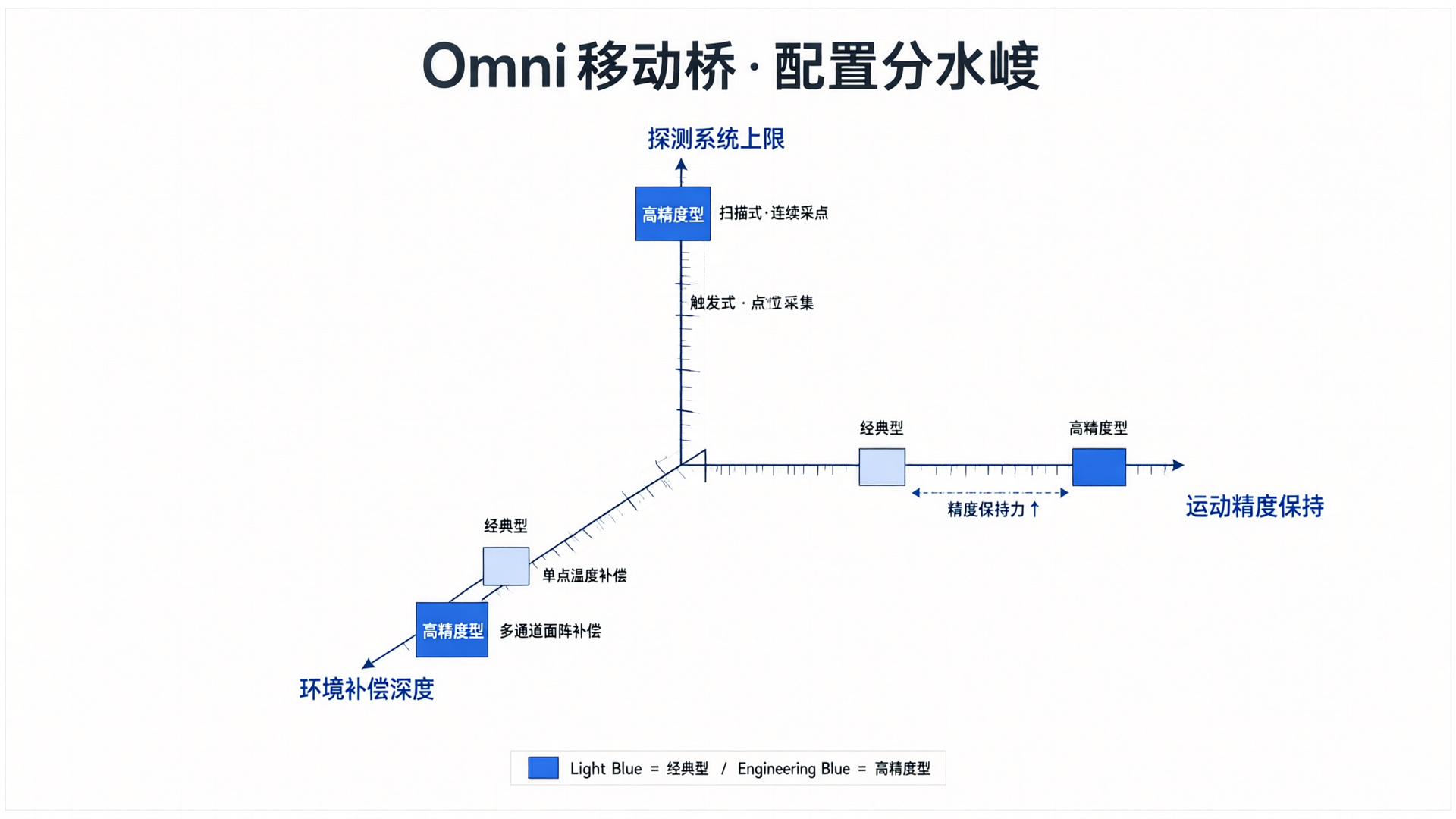
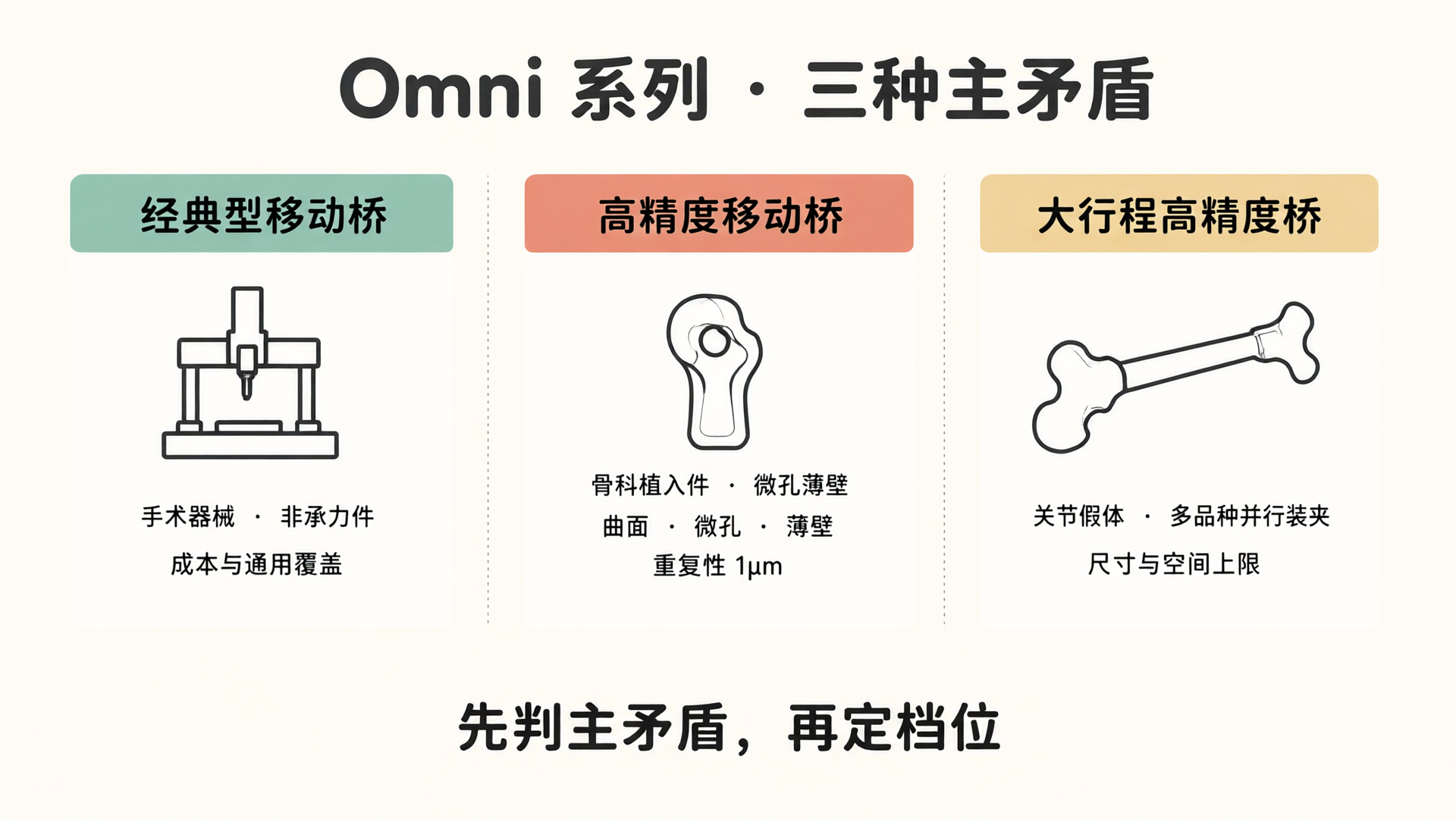
We currently offer the Omni series portable bridge CMMs in three tiers: Classic, High Precision, and Large Travel High Precision. These models address the three primary inspection challenges faced by medical customers.
The Classic Mobile Bridge Service is designed for conventional scenarios characterized by a wide variety of parts, small batch sizes, and medium dimensions. For components such as surgical instrument structural parts and non-load-bearing housings, where tolerances are relatively loose, the primary challenge lies in frequent changeovers rather than extreme precision. By balancing measurement coverage with cost efficiency, this solution frees up budget for flexible fixture and programming preparation, making it the more rational configuration for such production lines.
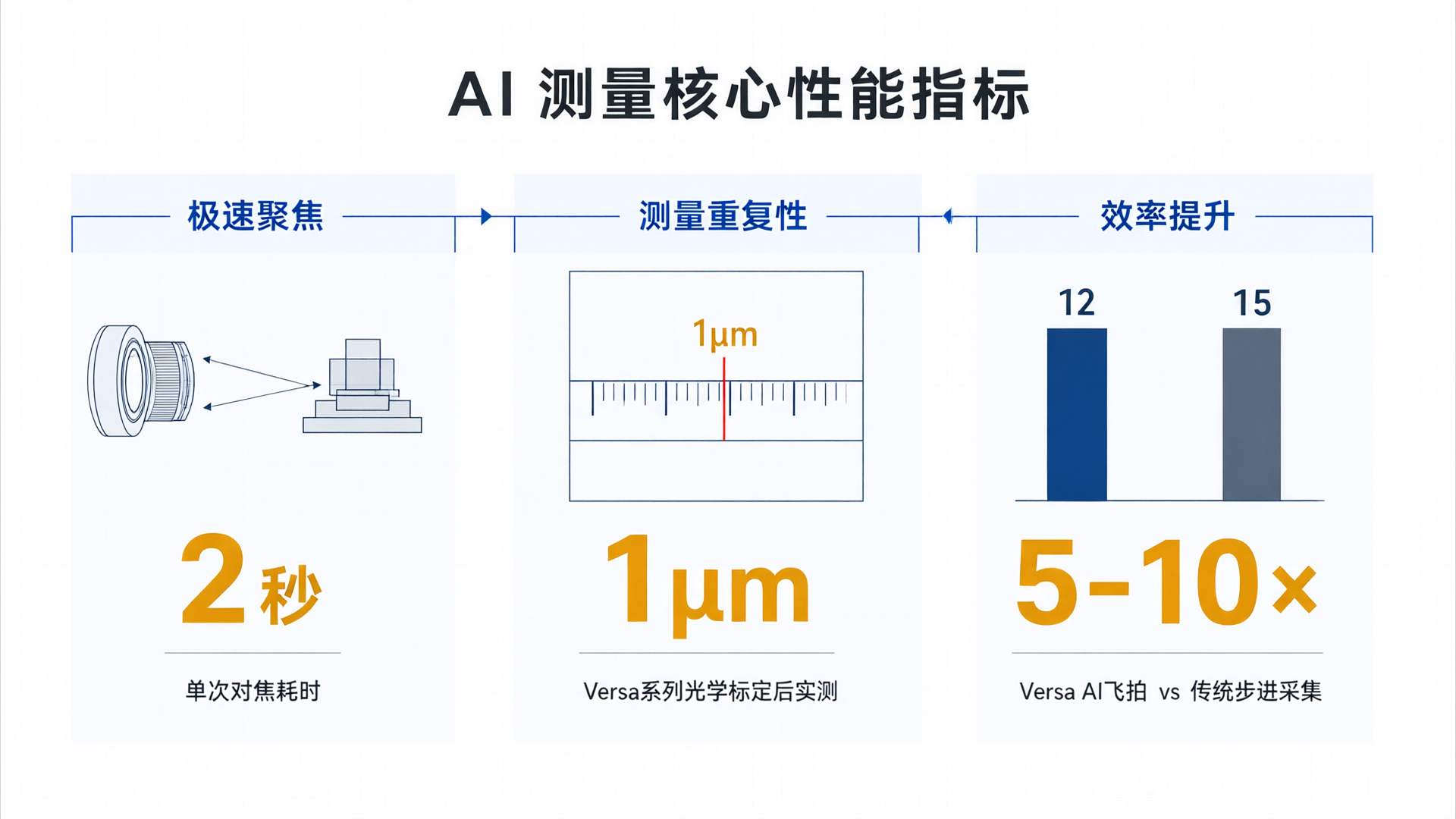
The high-precision moving bridge is designed for parts with hard-to-measure features. Orthopedic implants feature complex surfaces, micro-holes, thin walls, and tight tolerances that demand measurement repeatability at the micrometer level. Our precision metrology technology delivers proven repeatability of 1μm across this product line. For critical dimensions that determine compliance and part acceptance, achieving maximum repeatability is non-negotiable.
The large-travel, high-precision moving bridge addresses two key challenges: first, accommodating oversized parts like joint prosthetics and long rods that exceed the travel limits of standard small-to-medium tables; second, enabling parallel clamping of multiple part types within a single stroke. This approach covers multiple inspection tasks with one setup, minimizing changeovers. Its core logic remains creating space for flexibility—using "travel" as the lever to unlock it.
Three Levers for Selection Decision
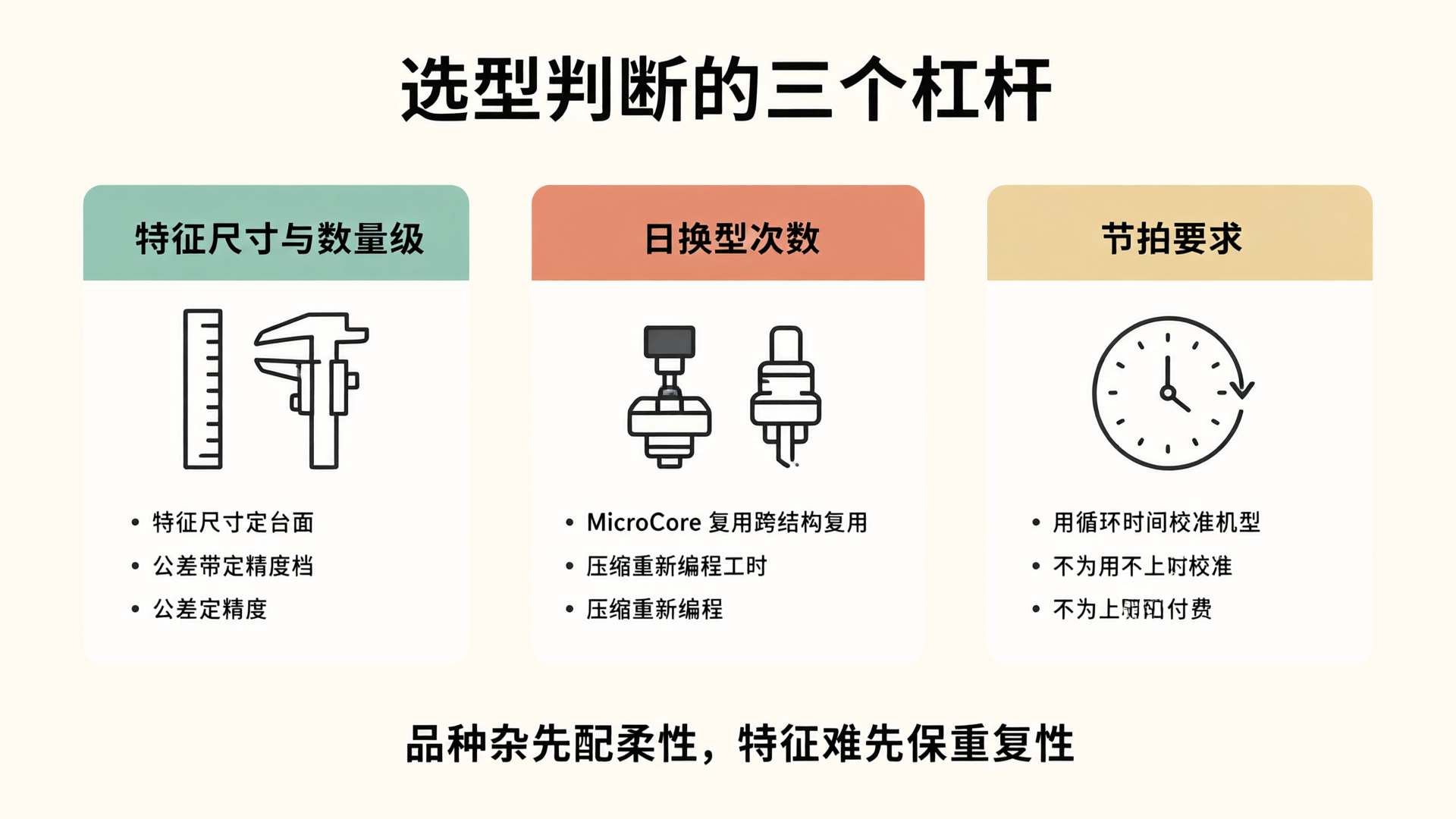
For a specific configuration, we make trade-offs using three quantifiable levers.
The first lever is feature size and magnitude: the maximum feature dimension sets the minimum table capacity, while tolerance bands and repeatability requirements define the precision tier. Together, these factors narrow down the eligible machine models. The second lever is daily changeover frequency: for frequent new product introductions, prioritize investment in program planning and fixture reuse to reduce changeover time per batch. This is handled by our MicroCore intelligent measurement software, which enables cross-part reuse of measurement points and evaluation schemes through a unified program structure, significantly cutting reprogramming time. The third lever is cycle time requirements: when batch size and delivery deadlines dictate sampling speed, use cycle time to calibrate the machine model—avoid paying for cycle time capabilities you won't need.
The order of these three levers is intentional. While most medical clients prioritize "accuracy" in their initial inquiries, the decision weight should instead address the primary constraint first: diverse part types require flexibility; difficult features demand repeatability; large or numerous parts necessitate travel range.
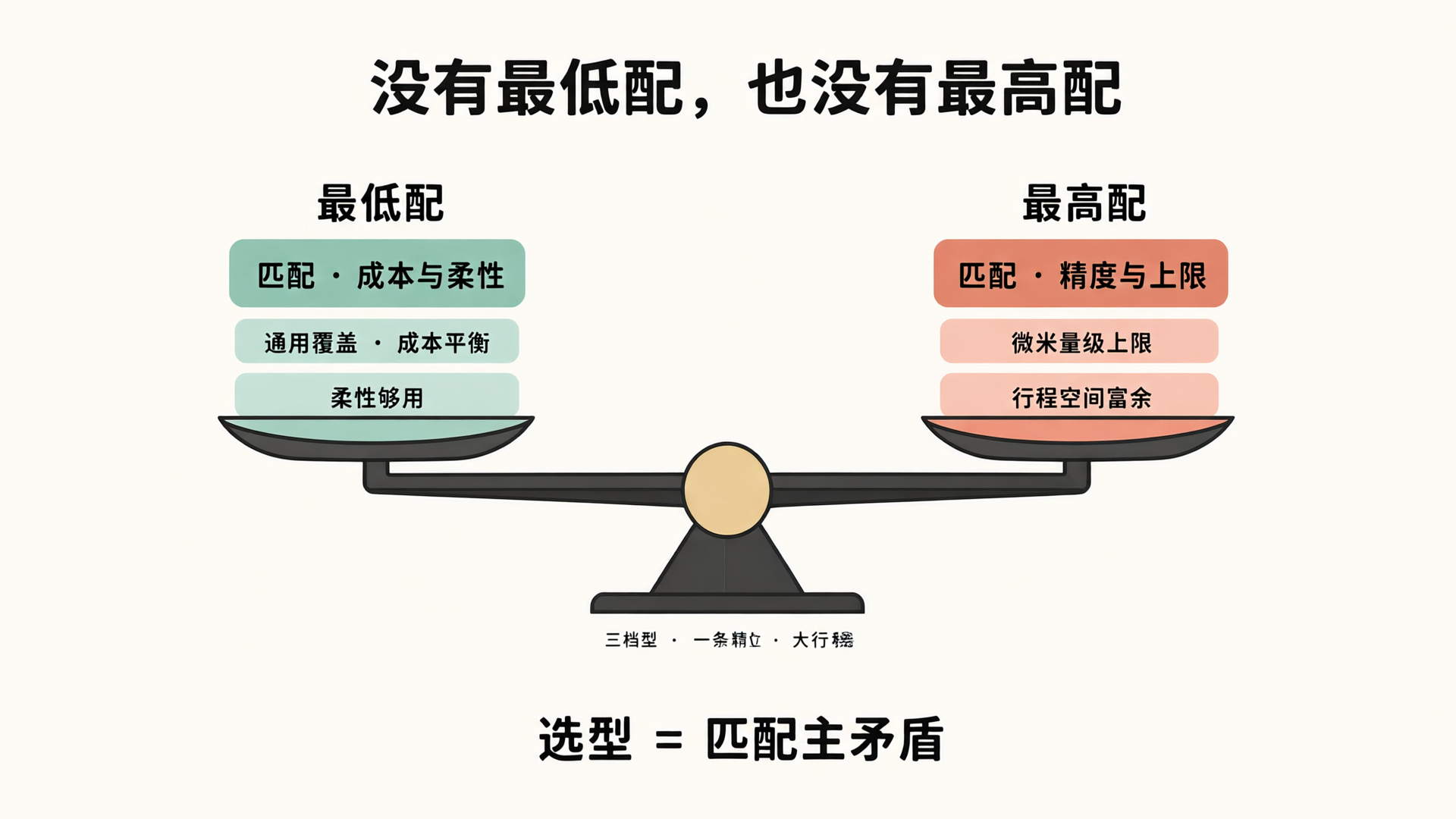
A machine's configuration is a set of trade-offs.
There is no minimum or maximum configuration for CMM selection; it depends solely on alignment with your primary inspection challenges. The Omni Classic balances cost and coverage, the High-Precision model ensures micrometer-level repeatability, and the Large-Travel High-Precision variant maximizes workspace and parallel flexibility. These options represent trade-offs, not a hierarchy of quality. Maikozhi Test deconstructs the system into configurable nodes—control unit, probe and mounting head, software—and provides an intelligent configurator for online setup and conflict detection. Using this unified logic, we transform the complex trade-off of low-volume, high-mix medical parts into a single, verifiable configuration choice.